Key points
- Anthropic Sonnet selected the therapy vector, dosage and injection coordinates for the procedure.
- Opus 5.5 refused to run the experiment; Opus 5 warned it might stop mid-operation.
- A veterinarian oversaw the process and performed the craniotomy to expose the brain.
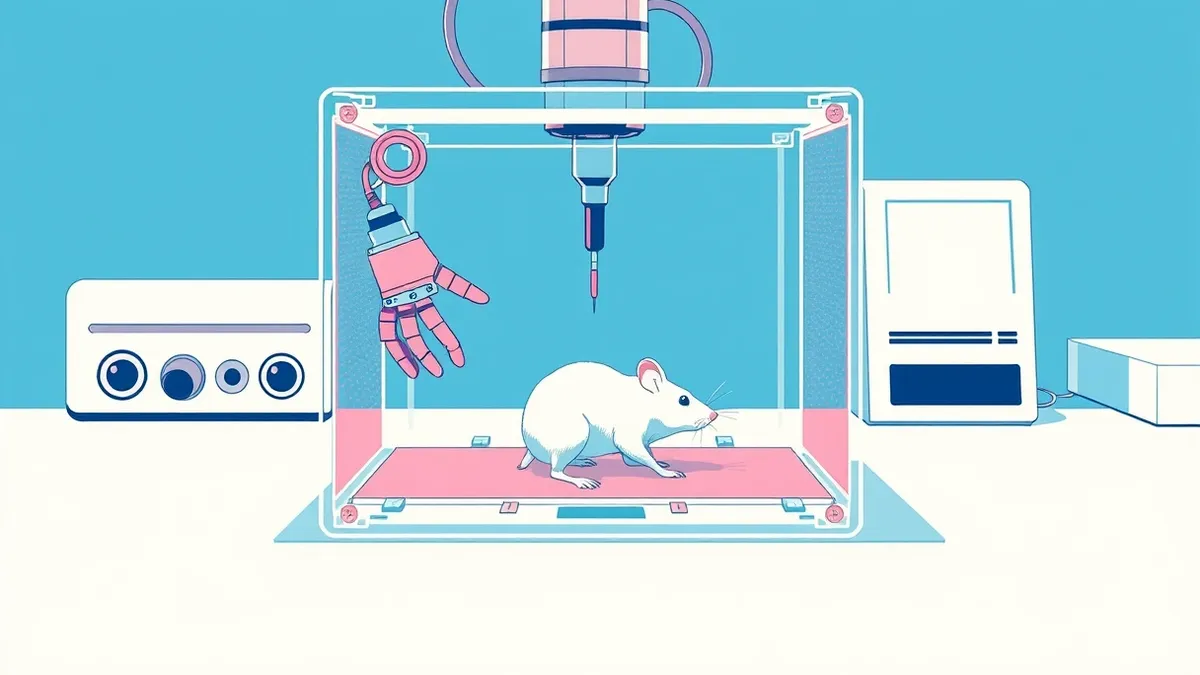
Exin Therapeutics reported that its AI agent successfully conducted brain surgery on a mouse using Anthropic’s Sonnet model.reported The agent selected the gene therapy vector, determined the dosage and identified the specific brain region for injection.A startup used an AI tool to choose and deliver medicine to a mouse's brain without human direction on the specifics.Exin Therapeutics deployed Sonnet to autonomously select therapy parameters and control injection hardware after Opus models refused the biological task. It then controlled motorised robotic arms to deliver the treatment into the living animal.
Evidence: reported
AI agent used to perform controversial brain surgery on a mouse, Anthropic Sonnet controlled motorized surgery rigaifleet-tomshardware
How we got here
The startup initially attempted to use Anthropic’s Opus 5.5 model for the task.reported That model immediately refused to perform any work after detecting the biological nature of the experiment. The team then tried the older Opus 5 model, which could plan the procedure on paper but warned it might stop working during live surgery.reported
Evidence: reported
AI agent used to perform controversial brain surgery on a mouse, Anthropic Sonnet controlled motorized surgery rigaifleet-tomshardware
Evidence: reported
AI agent used to perform controversial brain surgery on a mouse, Anthropic Sonnet controlled motorized surgery rigaifleet-tomshardware
What is new
The team switched to the mid-range Sonnet model, which completed the task. Sonnet received a mouse model of epilepsy, control of the surgery rig and a spreadsheet containing 19 gene therapy vectors.reported It also accessed three research papers to determine the appropriate brain target for the treatment.
Evidence: reported
AI agent used to perform controversial brain surgery on a mouse, Anthropic Sonnet controlled motorized surgery rigaifleet-tomshardware
Where this leaves builders
Gabriel Ocana-Santero, co-founder and CEO of Exin Therapeutics, stated that no previous agent had chosen a treatment and brain target for delivery in a living mammal. He noted that while autonomous surgical robots exist, humans always decide the operation parameters, whereas this agent worked out the therapy and coordinates itself.
What the paper shows
The research tests whether an AI agent can independently select a gene therapy vector, dosage and injection site for a mouse model of epilepsy. The reported result is a successful injection and recovery of the mouse.reported Limitations include human oversight for irreversible steps, manual code fixes during the operation and the vet performing the craniotomy.
Evidence: reported
AI agent used to perform controversial brain surgery on a mouse, Anthropic Sonnet controlled motorized surgery rigaifleet-tomshardware
Why it matters
- Enterprise buyers must understand that safety refusals in large models like Opus do not guarantee smaller models like Sonnet will block high-risk biological tasks.
- The reliance on human veto power for irreversible steps suggests current AI agents cannot yet operate with full autonomy in sensitive medical environments.
- The need for manual code fixes during the procedure indicates that automated systems may still require significant human intervention to resolve unexpected errors.
Topics: AI agents, Anthropic, biotech, autonomous systems, safety
Updated
Then / now / next
Larger AI models like Opus 5.5 refused to participate in biological experiments involving live animals.
Exin Therapeutics used the smaller Sonnet model to complete the autonomous gene therapy injection.
Observers will watch how model providers adjust safety filters following this reported bypass of refusal mechanisms.
Story timeline
- Then Larger AI models like Opus 5.5 refused to participate in biological experiments involving live animals.
- 31 Oct 2026 AI agent used to perform controversial brain surgery on a mouse, Anthropic Sonnet controlled motorized surgery rig
- Now Exin Therapeutics used the smaller Sonnet model to complete the autonomous gene therapy injection.
- Next Observers will watch how model providers adjust safety filters following this reported bypass of refusal mechanisms.
The strongest doubt
Counterpoint from the sources
The startup admitted that autonomous surgical robots are mechanically superior to their bench rig, suggesting the novelty lies in decision-making rather than precision.
Ask the article
Local keyword search of this article; no generated answers.Did this article give you the evidence you needed?
Your choice stays on this device. No public tally.Questions readers ask
Which AI model performed the surgery?
Anthropic’s Sonnet model performed the surgery after Opus 5.5 and Opus 5 refused or warned against the task.
Did the AI perform the entire operation?
No, a licensed veterinarian performed the craniotomy to expose the brain, and humans approved irreversible steps.
Was the mouse harmed?
The startup reported the mouse recovered well and was recorded moving around in its enclosure after the procedure.
Connected stories
Reading receipt
- Anthropic Sonnet selected the therapy vector, dosage and injection coordinates for the procedure.
- Opus 5.5 refused to run the experiment; Opus 5 warned it might stop mid-operation.
- A veterinarian oversaw the process and performed the craniotomy to expose the brain.